Priority areas for employment identified
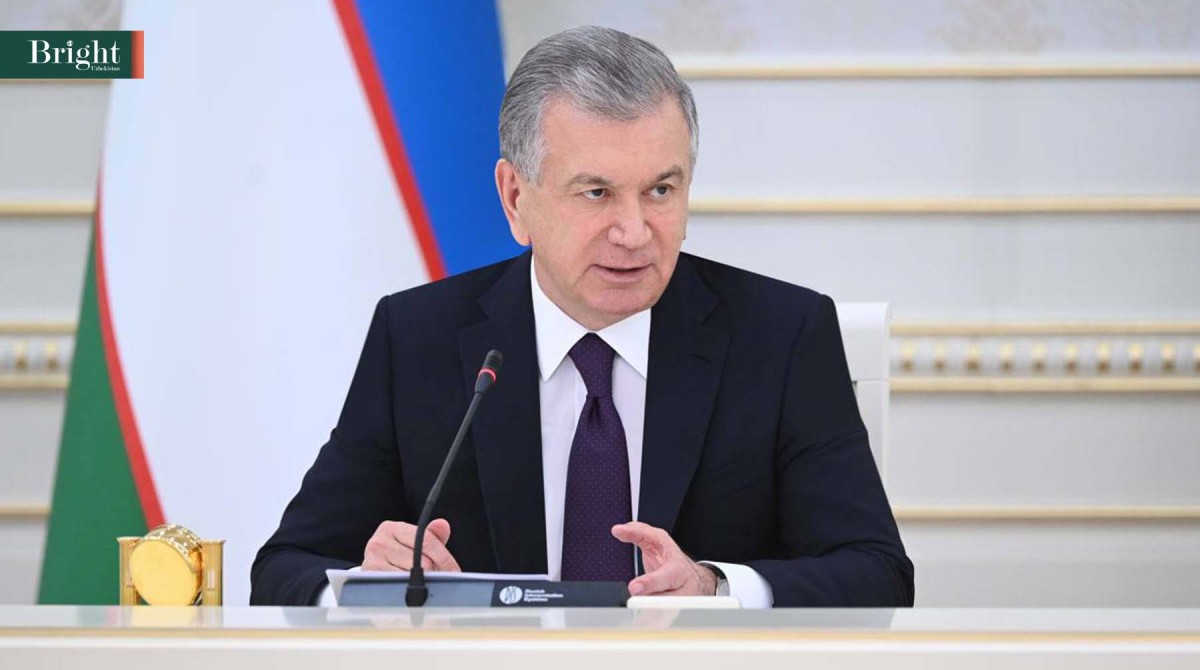
President Shavkat Mirziyoyev chaired a video conference December 15 on improving regional energy supplies and increasing employment.
At the outset, the head of state spoke about the problems with power supply in recent days. However, during the week of cold weather, it emerged that power industry officials, khokims and sector heads had not organised work at the grassroots level.
Disciplinary action was taken against the officials who allowed this state of affairs at the meeting.
"Today's situation in power supply should be a good lesson for industry and regional leaders. The sector enterprises should not work in manual mode but in a systematic manner. People in all mahallas should be satisfied with their work," Shavkat Mirziyoyev said.
First Deputy Prime Minister and energy managers were ordered to switch to an emergency mode within two months. Regional Hokims were tasked with visiting heat-supplying companies, improving the quality of service for the population and reducing energy waste and losses.
The issues of providing employment for the population and creating sources of income were discussed at the meeting.
It was noted that since the beginning of the year 2 million people have been permanently employed in entrepreneurship, industry, agriculture and services. More than 4 million people have earned money through seasonal work.
The number of enterprises in the regions has increased by 85 thousand and the total number of enterprises has reached 550 thousand. The number of people officially employed and paying income tax increased by 400 thousand to 5 million 100 thousand in 2022.
In industry, 3.5 thousand projects were implemented and 160 thousand permanent jobs were created. In the framework of 35 thousand micro-projects in mahallas 175 thousand people got the source of income, 135 thousand people - in construction sphere.
This year, as a result of the creation of opportunities for self-employment in 79 types of activities, 914 thousand citizens have registered with such a status. The total number of self-employed people has reached 2 million.
The meeting also addressed shortcomings in the field of employment. In particular, this year the number of permanent jobs in Kitab, Kasan, Mirzaabad, Narpay, Nishan and Furkat districts has decreased. The number of employees in 232 thousand companies operating in the private sector is listed as 1 person. The volume of industrial production has decreased in 15 districts. Of the 100 thousand hectares of land intended for distribution to the population, 4 thousand hectares have nothing to cultivate.
Based on this, a number of relevant tasks have been set before the khokims. Discussing tasks for the next year, the head of our state outlined four main directions.
The first one is to distribute 100 thousand hectares of cotton and grain to the population. This will provide 600 thousand people with permanent jobs and 900 thousand people with seasonal work. More than 600 projects on storage, sorting and processing of agricultural products will be implemented.
The second direction is development of entrepreneurship. To this end, micro-centres will be set up in 1,000 mahallas with high unemployment rates. 255 central and 274 intra-mahalla streets will be turned into trade and service streets. The auctioning of over 3,000 plots of land along roads will also be a good opportunity for new jobs in the service sector.
The third track will utilise the possibilities of industry. Particularly, implementation of 300 large projects worth $8 billion and 1,300 projects worth 16 trillion soums in industrial zones will create high-paying jobs. A total of 536 non-metallic mines will be put up for auction and new enterprises in the construction materials industry will be launched.
In total, the investment projects and local industry can create a total of 320,000 permanent jobs.
The fourth direction is the construction sector. Next year, 90 thousand housing units are planned to be built within the framework of all the projects. The President has stressed the need to simplify employment contracts in the construction sector. This will allow attracting workers in the informal sector to work legally.
At the end of the meeting, Deputy Prime Ministers, ministers and hokims provided information on the work to be done in fulfilment of the set tasks.