How did Tashkent become the capital?
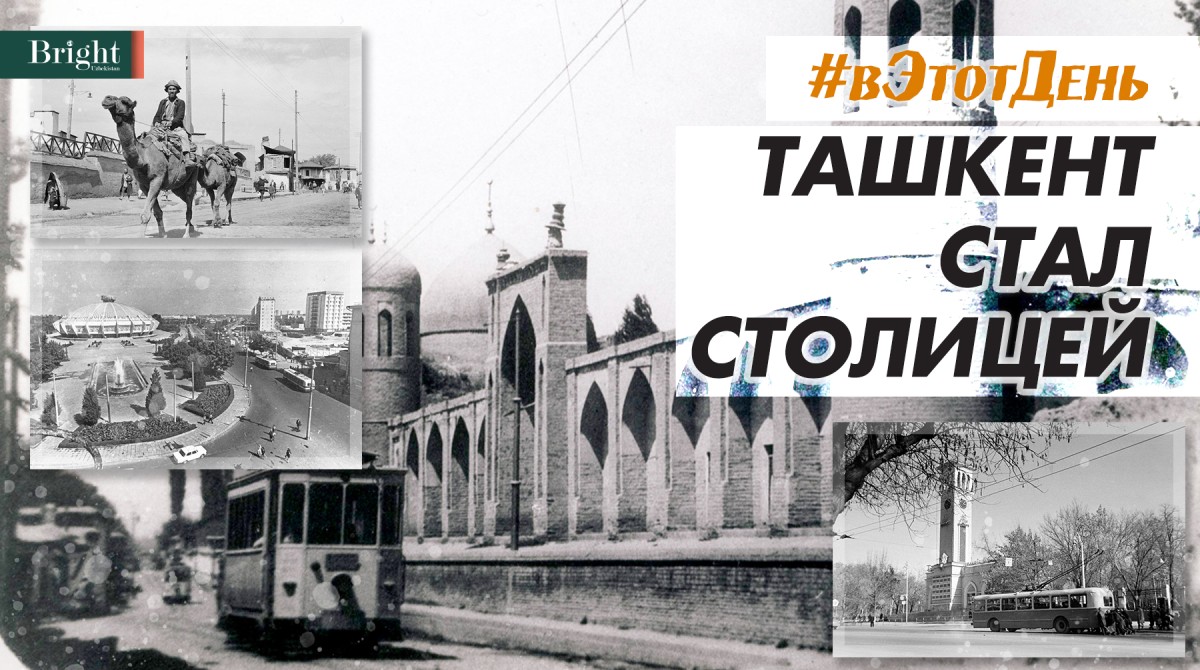
On August 17, 1930, the capital of Uzbekistan was moved from Samarkand to Tashkent.
It is known that after the October Revolution of 1917 in Russia, Tashkent was declared the capital of the Turkestan ASSR.
Later, during the formation of the Uzbek SSR, the issue of choosing the capital of the new Soviet republic was hotly discussed. After the establishment of the Uzbekistan SSR as a result of national-territorial demarcation in October 1924, Bukhara became the official and conditional capital.
In February 1925, Bukhara became the capital of the Uzbek SSR, but in May of the same year, the capital was officially moved to Samarkand, and this city had the status of the capital until August 1930.
On August 17, 1930, the capital of the Uzbek SSR was moved to Tashkent, which is still the largest city in Central Asia in terms of territory and population.
An earthquake occurred in 1966, which went down in history as the largest Tashkent earthquake in our region. As a result of the earthquake, the central part of Tashkent was almost completely destroyed. A large-scale reconstruction of the city was carried out, including the entire former Soviet Union. Thanks to this, the city was restored in 3.5 years.
We remind you that Tashkent is one of the oldest cities of Central Asia and one of the largest cities of the CIS countries. In 2009, the 2200th anniversary of our capital was celebrated. About 3 million representatives of different nationalities live in Tashkent.